![]() |
Jerry William AuldBorn and raised in Calgary, Jerry has called Canmore home since 1996, after traveling the world only to find the Bow Valley the best place to settle. He worked two seasons for the provincial park trail crews, climbing avidly before, during, and since among the Rockies. During this time, Jerry learned of the legend of Hooker and Brown, and was astonished to find himself so ignorant of so much of his own history. Through the course of research on this novel, he discovered that he is directly related (eight generations) to William Auld, Chief Factor of York Factory in 1811, when David Thompson opened Athabasca Pass and established the route for all subsequent fur brigades, and in fact, was Superintendent of Northern Factories, a position that became known as Governor in Chief, and was held ten years later by Sir George Simpson. Jerry finds it especially satisfying to know that his ancestors would have interacted with people like Thompson, Douglas, and Simpson. Jerry lives with his wife (fourteenth generation Québécoise) and their daughter, dividing their time between the mountains and Quebec City. |
|
|||||||||||||
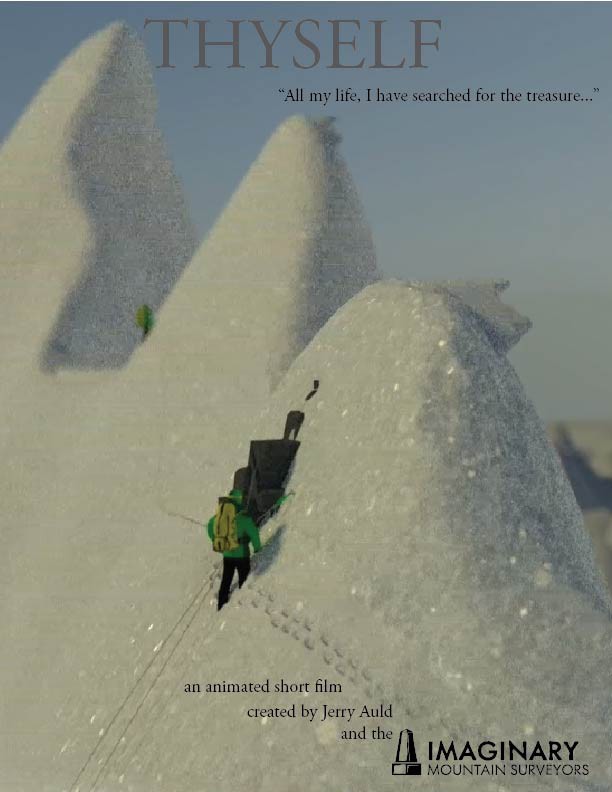
Hooker & BrownNovel Synopsis (Brindle and Glass 2009)Rumi is a new graduate of geology, starting a summer job on the trail crew of the mountain parks, wondering what path to follow in life. When he sees a huge peak in a storm, standing where it should not be, it prompts his co-workers to tell the legend of Hooker and Brown. Intrigued, he digs into the past stories of David Thompson, David Douglas, Thomas Drummond, Sir William Hooker and Sir George Simpson. Soon he's following the exploits of the early explorers and climbers to the Canadian Rockies, Arthur Coleman, Norman Collie, and James Outram, who followed the new railway and ascended the high peaks in their march north to find the mythical Hooker and Brown, discovering the Columbia Icefields and the great summits of the divide. He and the others at the park compete to follow the old maps and crest each high point as they get closer to Hooker and Brown. But as he realizes how flawed most maps are, he also begins to understand that to follow the explorer’s maps means he will find the same thing they did: disappointment. If he's not searching for the two peaks, then he must be searching for the inspiration they provided the early explorers, and now to him and his friends. Is it possible to keep this motivation and make life compelling, or are we destined to always solved the mystery and endless search for another? This is a journey to determine what is truth and what is agenda, what is mystery and what is ego, what is the map and what is the territory, and the way in which we can nurture mystery and so keep in touch with the land - the sense of place in which we live - and how we can keep the mystery alive. |
|